
NEUROSCIENCE & HABITS
Social media addiction: How to do a dopamine fast to reduce anxiety.
How variable intermittent reinforcement hijacks your attention and why reclaiming silence calms your nervous system.
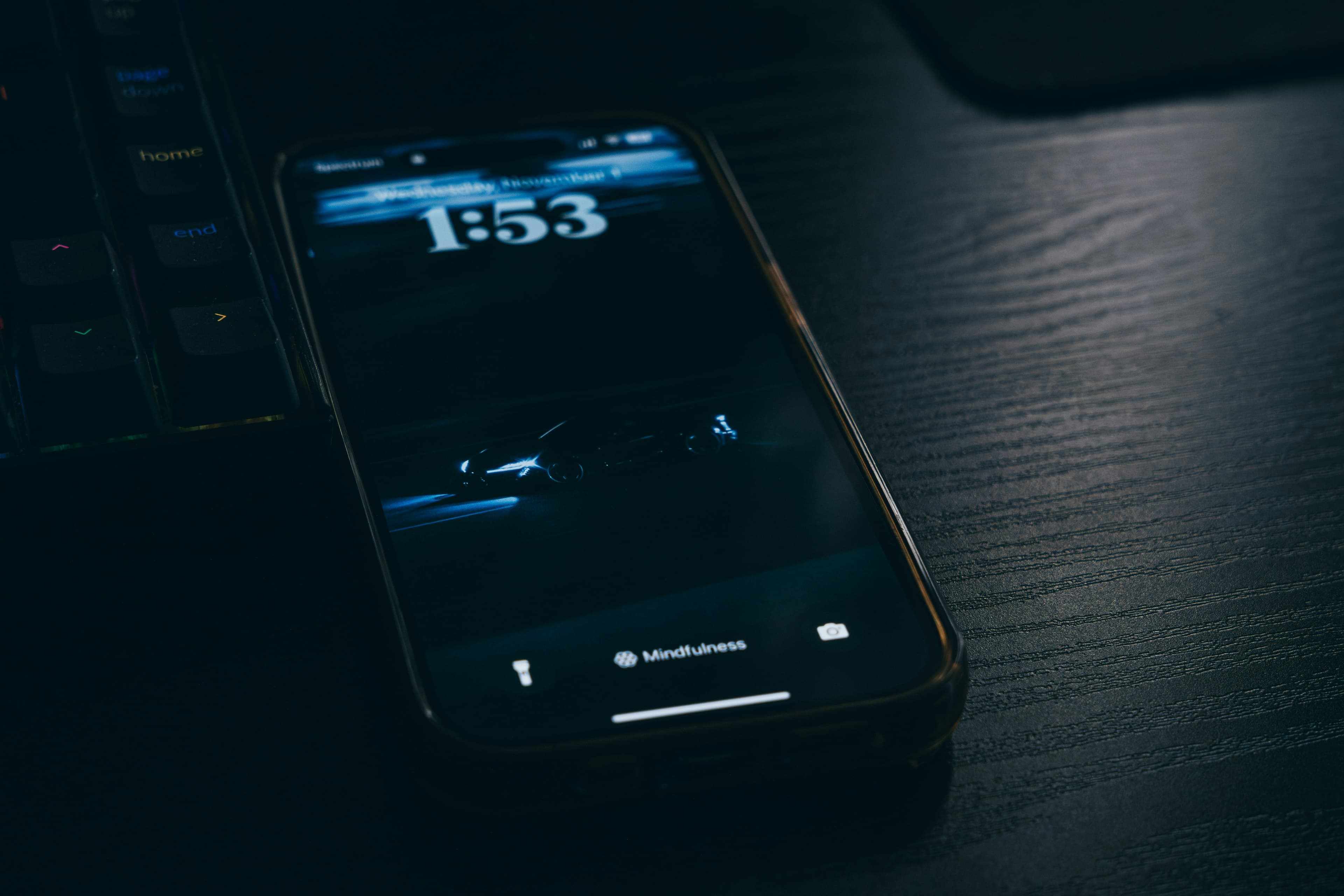
We live in an era of permanent distraction, yet it would be a mistake to blame our lack of discipline alone. What we face is an asymmetric battle against armies of behavioral engineers and neuroscientists in Silicon Valley whose sole objective is to hack our attention system. And they are winning. The device in our pocket is not a simple phone; it is a high-precision dopamine dispenser that has reconfigured our boredom tolerance threshold, generating a state of latent anxiety that is difficult to escape.
The mechanism is perversely simple and relies on "variable intermittent reinforcement," the exact psychological principle that makes slot machines addictive. When you swipe your finger across the screen (the famous infinite scroll), you never know what you will find next: an outrageous headline, a funny meme, a message from someone you like? That uncertainty releases dopamine, the neurotransmitter of craving and seeking. By receiving these effortless chemical micro-doses at breakneck speed, the brain recalibrates its baseline. It becomes intolerant of slowness. Reading a book, holding a unhurried conversation, or simply waiting for the bus doing nothing become unbearable activities because they do not offer that instant "hit."
The direct consequence is that we have lost the capacity to inhabit silence. In the empty gaps of the day, where our mind once wandered and rested (the default mode network), we now feel an anxious urgency to fill the void with digital inputs. Boredom, which evolutionarily serves as the prelude to creativity and introspection, is now interpreted as a threat. We have become unable to be alone with ourselves because doing so would mean listening to the internal noise we try to drown out with external noise.
Reclaiming sovereignty over our attention requires a "dopamine detox." It is not about throwing your phone into a river, but about introducing conscious friction. Turning off notifications, establishing tech-free zones, or choosing to look out the window instead of at a screen during a commute are acts of neurological resistance. At first, withdrawal triggers irritability and anxiety (the brain demanding its dose), but it is the only path to resetting dopamine receptors and rediscovering that real life, with its slow pace and pauses, is infinitely richer than any algorithmic feed.